
7 GM challenges and how to overcome them
Being a GM gives you the opportunity to create incredible stories around the table with your friends. While this experience is a lot of fun, and more and more people are branching out to try it, there are a few things that new and veteran game masters don’t quite know how to navigate. Let’s tackle a few of the most common GM challenges, with some ideas to overcome them.
Scheduling games
We’ve all seen the memes about how difficult it is to get a group of busy adults together to play games. This is where a GM needs to establish a tiny bit of tough love with their players. If no one can agree on a day or a time, with players flaking at the last minute, no one gets to play and that’s no fun at all.
The biggest mistake a GM can make here is to ask their players to decide on a future date when they will all be available. Leaving the schedule so open-ended will result in endless discussions, cancellations and postponements. Instead, you can try different tactics, based on whether you’re playing a one-shot or an ongoing long-term campaign.
If your party has a one-shot in mind, choose a weekend far enough away for you to do all your necessary prep. Add that weekend, plus the following two, to a poll and ask your party to select the date which suits them best. Whichever date gets the most votes is game day. Unfortunately, it will always be true that not every person will be able to make every session. You can always offer to run the one-shot again at a future date for anyone who couldn’t make it the first time.
For long-term campaigns, get together with your party to discuss scheduling. Talk in person and decide how often everyone is prepared to play, making sure you have enough time between sessions for prep. From there, choose a scheduling milestone that will be the same every session. For example, if you play weekly, make it every Tuesday. If you play monthly, make it the first Tuesday of every month. If a player is unable to make a particular session, their character could potentially be out getting supplies or visiting friends in the nearest village. Plan a light side quest for the rest of your party to help everyone else in the group keep their habit of playing at the agreed times.
Balancing the spotlight
As a GM, it’s natural for you to want everyone to have a great time creating an exciting narrative together. But in every party there are players who seem to do most of the talking, and others who are more reserved. If the spotlight isn’t balanced well, it’s easy to wind up in a situation where your quiet players don’t get to contribute to the story at all.
While it may seem like the most instinctive solution, we don’t recommend trying to give each player the same amount of spotlight in each and every session. This will lead to you having to pigeonhole backstories and skills into areas where they don’t fit, lowering the quality of the narrative for everyone. Instead, pay attention to where the spotlight seems to be landing through your campaign as a whole.
If you have players who aren’t getting the chance to give as much input as others, plan future sessions around their character’s backstory, inventory and skills so that they have a well thought-out opportunity to contribute to the story. If you’re worried this will disengage the rest of the party, you can also consider splitting up the group. Have a couple of them go into town for supplies, for example, while the rest go foraging. Another option could be to have one team fight a monster while the rest of the party solves an escape puzzle.
Players railroading themselves
This phenomenon can look like one of two very different things.
Firstly, you may have a cautious player who always keeps to the path, only picks up the plot hooks you’re explicitly putting down and doesn’t ever offer creative or non-linear solutions to problems. These players or parties miss out on engaging exploration, important side quests and fun Easter eggs. You will often see this happening with new or nervous players. To help them get off the beaten track, make sure your questions are as open-ended as possible, and make sure they are always rewarded for creative thinking. If they decide to stray from the path, you could treat them to some loot or some quick high-reward combat.
Secondly, they can make decisions that lead to early main character death, burning down the main location of the campaign or (if some rumors are to be believed) ending the world itself. The solution here comes down to communication. There is nothing wrong with sitting your players down in a session zero and asking them to play the game you have prepared. We know that there are many parties and players out there who play for the goal of breaking the game. Let them know upfront that this isn’t that kind of game, and they need to respect that or face in-game consequences. If you’re running a full anything-goes anything-can-happen sandbox, make sure that breaking the game is both extremely challenging and risky, to prevent it from happening too soon.
Keeping track of character information
It is not the GM’s responsibility to keep track of character stats, inventories, backstories, etc. We repeat, this is not the GM’s responsibility! Your players are responsible for updating their character sheets during and after every session. Remind them to send you all their updated character information if you need it to plan out your next session.
And what if your players don’t update their character sheets in time for the next session? Make like the veteran GMs of Reddit and ensure the whole party knows this rule: If it’s not on your character sheet, it doesn’t exist. If a character gained a level last time and didn’t update their character sheet, they no longer have that level this week. If they didn’t update their inventory with all their new loot, sorry, loot got lost! If they didn’t fill in their backstory for the GM to draw from, no special Easter eggs or personalized quest beats for their character until they do.
Main character death
This can feel especially hard if you’re a new GM. You might feel guilt for your player who lost a character they worked hard on, or you might feel anxious about how it will affect the story. It’s important to remember that character deaths are inevitable, and that most RPGs are designed to handle them.
If you’re playing an old school game, your party of characters can decide if they want to revive their friend. That player can also plan in advance to ensure they have reviving spells, potions, or deals with the devil in their inventory should they need them. For many experienced players, character death is a natural part of the game, and many will even opt to bring in a brand new character that the rest of the group can meet on the road as they continue their adventure.
There are also many roleplaying games that are combat-lite or have no combat at all. Think slice-of-life storylines, mechanics that reward more creative thinking, and games that rely on puzzle and mystery solving to propel the story forward.
Ask yourself what kind of game you’d like to run, and make sure you have a group of players who are looking for the same.
Lawyering the rules
You get players who are helpful about the rules, and then you get players who are antagonistic about the rules. GMs are happy to engage with the first, but navigating the second can be a challenge. Plan to spend a portion of your time during your session zero to fill your party in about which system rules are rock solid, and which ones you have adapted into different ‘house rules’ for the upcoming campaign.
When you’re having this discussion, let your players know, in no uncertain terms, that you will not allow arguments or lengthy interruptions about the rules to derail the game and break immersion. If they have a question or concern about a rule, they need to write it down and bring it to you for discussion after the session is complete. If they feel the GM has broken a rule that directly affects their character, they can bring it up politely during gameplay and ask if they can retake their action. Once that is done, it’s back to the game, with a more in-depth chat after the game if your player still needs it.
If players don’t agree to your conditions about rules and rulings, you might not be a compatible GM for their style of play, which is totally okay! They can join in your next campaign, run their own parallel campaign or temporarily join another party. Disagreements about game rules should never be a source of drama for a group, and good communication is the best way to avoid it.
Never enough dice
The biggest GM struggle of all!
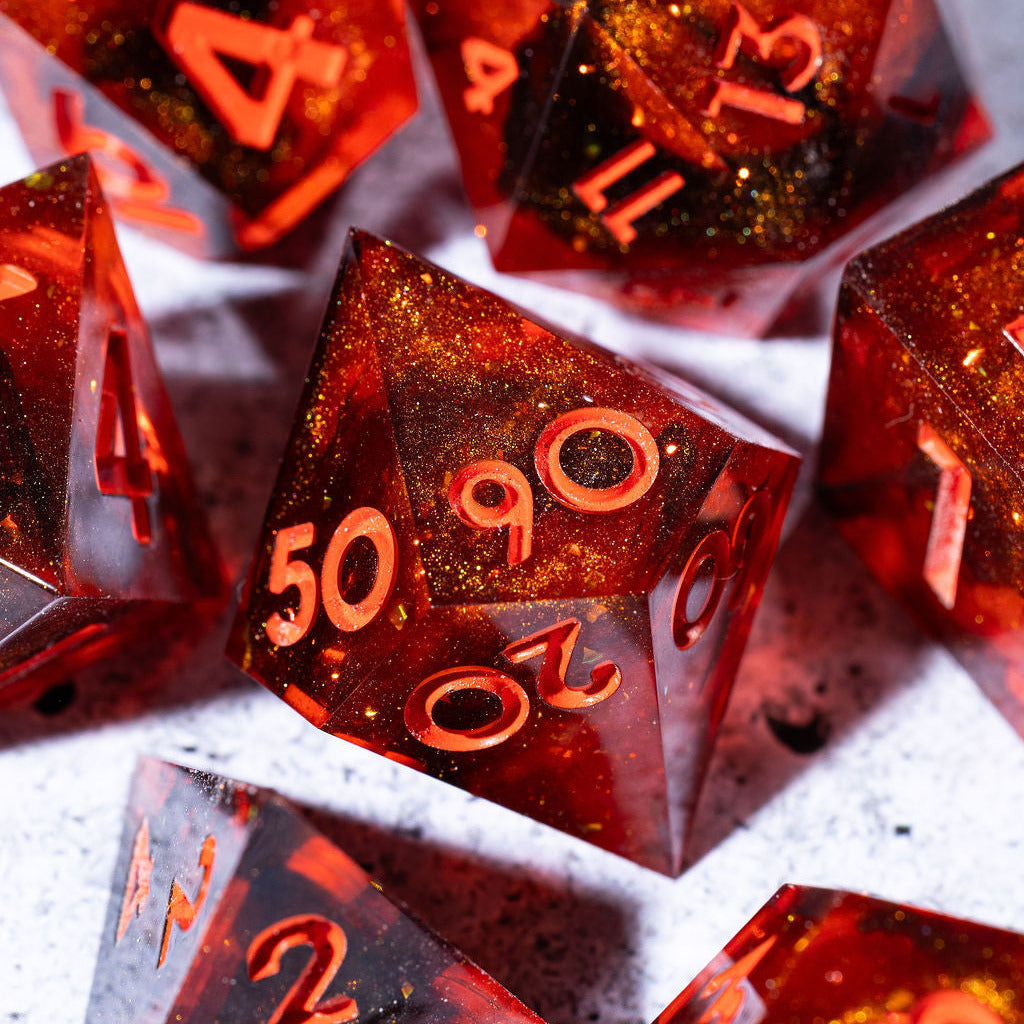
Don’t worry, we always have plenty on hand. If you’re burnt out and looking for a little treat, about to start a new themed campaign or looking for gifts for your players, we definitely have a set that’ll get the job done.
Explore all our available dice here.



Leave a comment
This site is protected by hCaptcha and the hCaptcha Privacy Policy and Terms of Service apply.